
Background
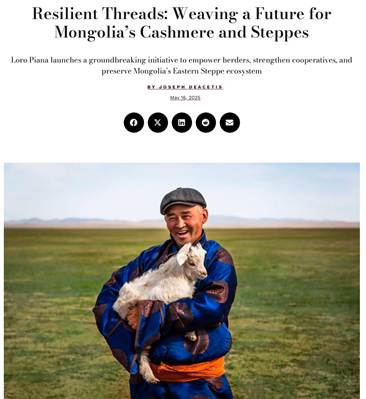
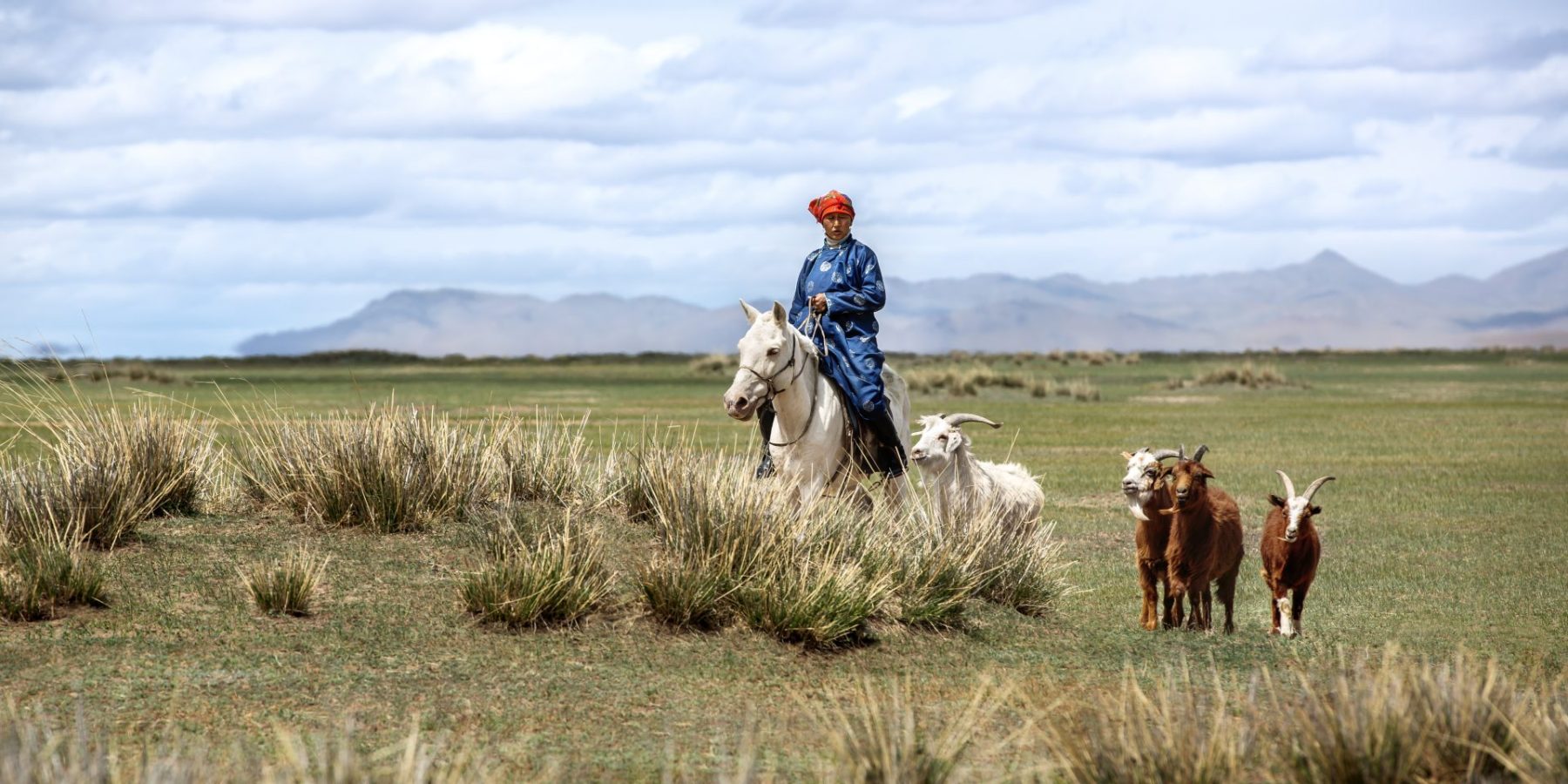
The Eastern Steppe of Mongolia is one of the last pristine grassland ecosystems in the world and is home to nomadic herders and their livestock, as well as migrating herds of endemic Mongolian gazelles. Cashmere goats are the backbone of pastoralist livelihoods in this region, providing income, identity, and connection to centuries-old herding traditions. The region produces some of Mongolia’s best cashmere, which is the primary income source for these pastoralist herders, and represents 5% of GDP for the overall economy.
Rangeland degradation and overgrazing, biodiversity loss, climate extremes, and declining human and animal health are straining the fragile steppe ecosystem. As grasslands degrade, herders are more impacted by worsening dzud events (severe winter), leading to serious income losses and growing pressure to sustain their way of life. When left with no other choice, herders will migrate to cities where poverty cycles lead to even more dramatic consequences.
The Resilient Threads initiative is helping address these urgent challenges by building the resilience of herders’ communities, livestock, wildlife and grassland ecosystems in the Eastern Steppe using a gender-responsive, One Health approach. It has been developed as a multi-stakeholder collaborative partnership with private sector: Loro Piana and LVMH, international organisations: Odyssey Conservation Trust (OCT) and the United Nations to Combat Desertification (UNCCD) and the Sustainable Fibre Alliance (SFA) in Mongolia, together with Mongolia government and herder communities.
| Location | Sukhbaatar Province, Eastern Steppe, Mongolia |
|---|---|
| Threatened Ecosystem and Wildlife | The Eastern Steppe is globally significant as a biodiversity hotspot and critical carbon sink. It is home to one of the largest herd on migrating ungulates with 2.12 million endemic Mongolian gazelles and to other endangered wildlife. |
| Local people | Pastoralist herders are at the heart of Mongolia’s culture and economy. In Sukhbaatar, herder families rely almost entirely on livestock for food and income, with women managing some animal husbandry and cashmere harvesting. More regular and intense dzud events are increasing hardship for people, livestock, and wildlife in this area. Supporting herders, especially women, is essential to restoring resilience and ensuring equitable benefits from sustainable cashmere. |
| One Health Challenges | One Health Challenges Health of ecosystems and wildlife: Grassland degradation and reduced forage availability, driven by overstocking and climate change, threaten wild species and the ecological services they provide and weaken livestock’s resistance to disease and productivity. Health & livelihood of people: Herders face food insecurity afer dzud, limited healthcare access especially for women, and growing vulnerability to zoonotic diseases and non-communicable diseases. Health of livestock: Infectious disease outbreaks including transboundary ones (PPR, FMD) , poor nutrition, and limited veterinary support reduce productivity and increase losses during dzuds. |
| Activities | Activities One Health capacity building programme at all levels in Mongolia(University students, professionals, school students, herders) Resilience building by strengthening the adaptive capacity of herders and preparedness to shocks Empowerment of herders as stewards of rangelands and biodiversity and development of a regional One Health Network Inter-sectoral and transdisciplinary collaborative partnerships and research Inter-generational transmission of Traditional Ecological Knowledge Ensuring that Mongolian cashmere remains not only a national heritage and source of pride and vital economic asset for Mongolia but also a model of resilience, equity, and One Health in Action. |
THE CHALLENGE
Mongolia’s Eastern Steppe was once a thriving ecosystem with balanced populations of wild gazelles and livestock managed by nomadic herders, but is increasingly under threat from rangeland degradation, overgrazing and climate change as well as socio-cultural inequities. Degraded pastures and recurring droughts and dzuds are leading to biodiversity loss and weakened livestock, threatening the livelihoods that depend on it.
At the same time, herder families face limited access to veterinary care, healthcare, and sustainable grazing resources. Women, who play central roles in family healthcare, animal husbandry and cashmere harvesting, are disproportionately affected by these compounding pressures.
OUR IMPACT
- Our project is already showing the importance and impact of a public – private partnership for resilience and sustainability, as we co-founded Resilient Threads with private sector: LVMH and Loro Piana , the Sustainable Fibre Alliance (SFA), the United Nations to Combat Desertification (UNCCD), Mongolia government and herders.
- We have completed Mongolia’s first international One Health Training of Trainers with 30 certified trainers, in partnership with our international academic partners: The Royal Veterinary College (London) and the University of Liège (Belgium)
- We have completed the first One Health Dzud Impact Assessment in Mongolia, providing critical recommendations for improving early warning systems which have already been embedded in regional and national policy.
- The first regional One Health Network with One Health Hubs in project soums and a Biodiversity Centre have been established, fostering strong collaboration between all stakeholders to deliver integrated One Health services.
- Together, we will continue to work to increase adaptive capacity to changing weather, and improve the health of people, livestock, and wildlife.