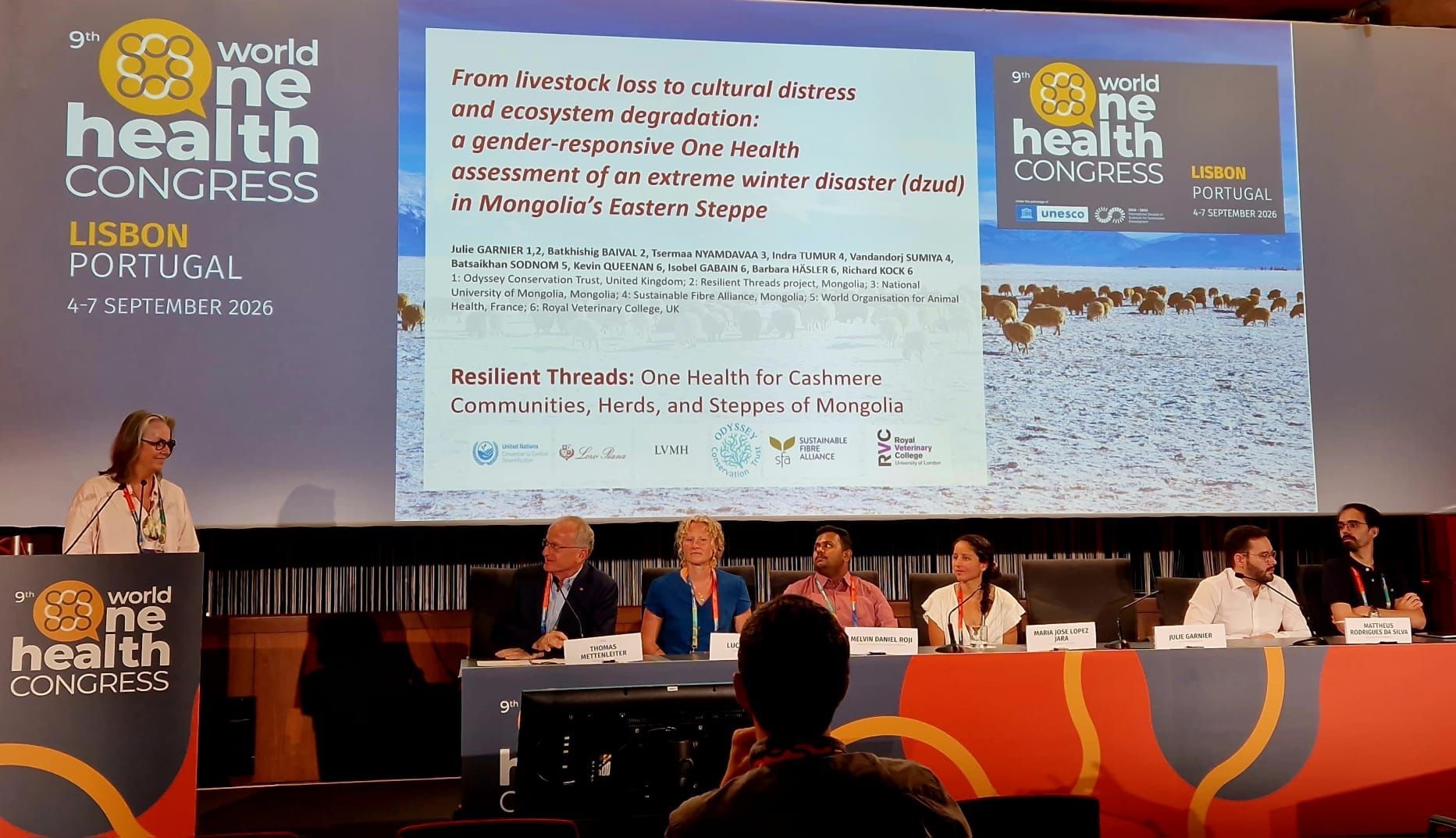
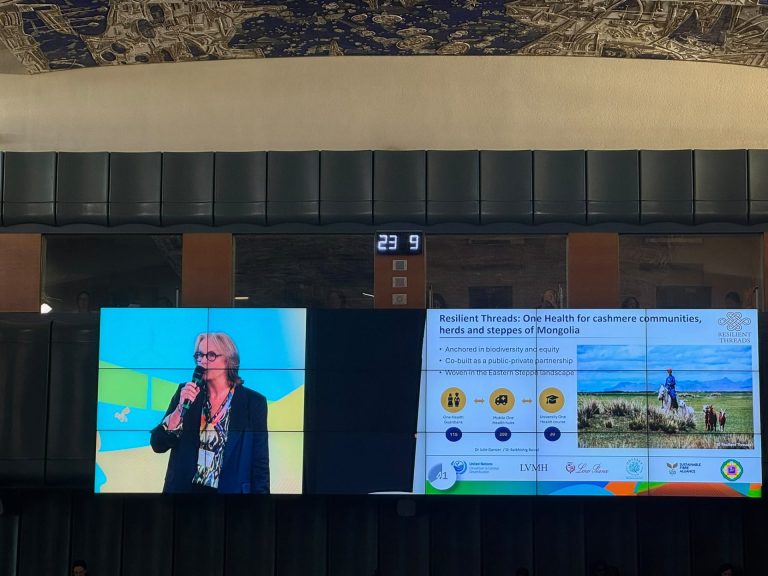
OCT was invited to share new findings on why a One Health approach is essential for building resilience to extreme climate events like dzud in Mongolia at the #WorldOneHealthCongress2026 in Lisbon (4th-8th September 2026) during a closing session “Late Breakers: Novel and Outstanding Discoveries”.
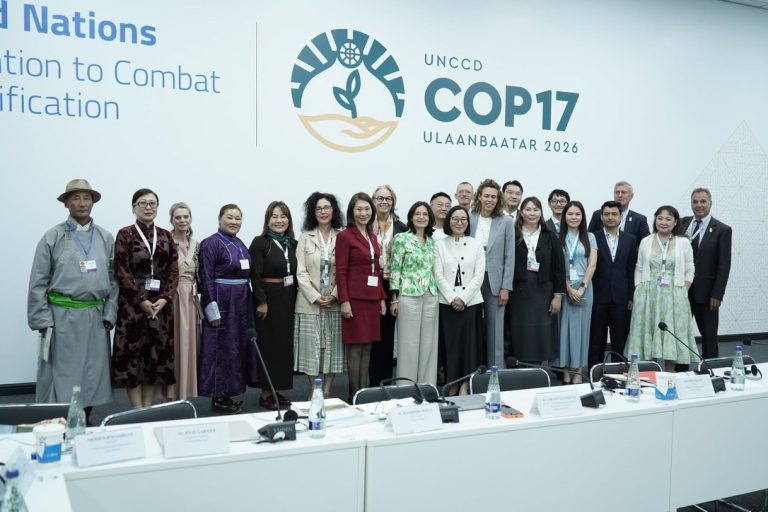
This work is part of #ResilientThreads: One Health for the Cashmere Communities, Herds, and Steppes of Mongolia— a multistakeholder partnership between the UN Convention to Combat Desertification Loro Piana, LVMH, Sustainable Fibre Alliance, and the Government of Mongolia, with collaborations with the Royal Veterinary College and the Université de Liège.
Following the devastating 2023–24 dzud, we carried out the first One Health impact assessment of dzud in Mongolia’s Eastern Steppe. The key message: dzud is not just an animal health crisis, or a human crisis, or an ecosystem crisis — it is all three, intertwined, with longer-term impacts which erode the resilience of all. Building resilience means acting simultaneously across five interconnected leverage points:
🐎 Nomadic wisdom and sustainable rangeland management
🌱 Biodiversity conservation and ecosystem regeneration
🩺 Integrated One Health services
🧶 Livelihood diversification and certified value chains
⚖️ Gender equity, education, and social protection
OCT is grateful to everyone who stayed until the end — and to the herding communities of Sukhbaatar whose knowledge and resilience are at the heart of our project.

One Health approach is essential for building resilience to extreme climate events
Our Partners